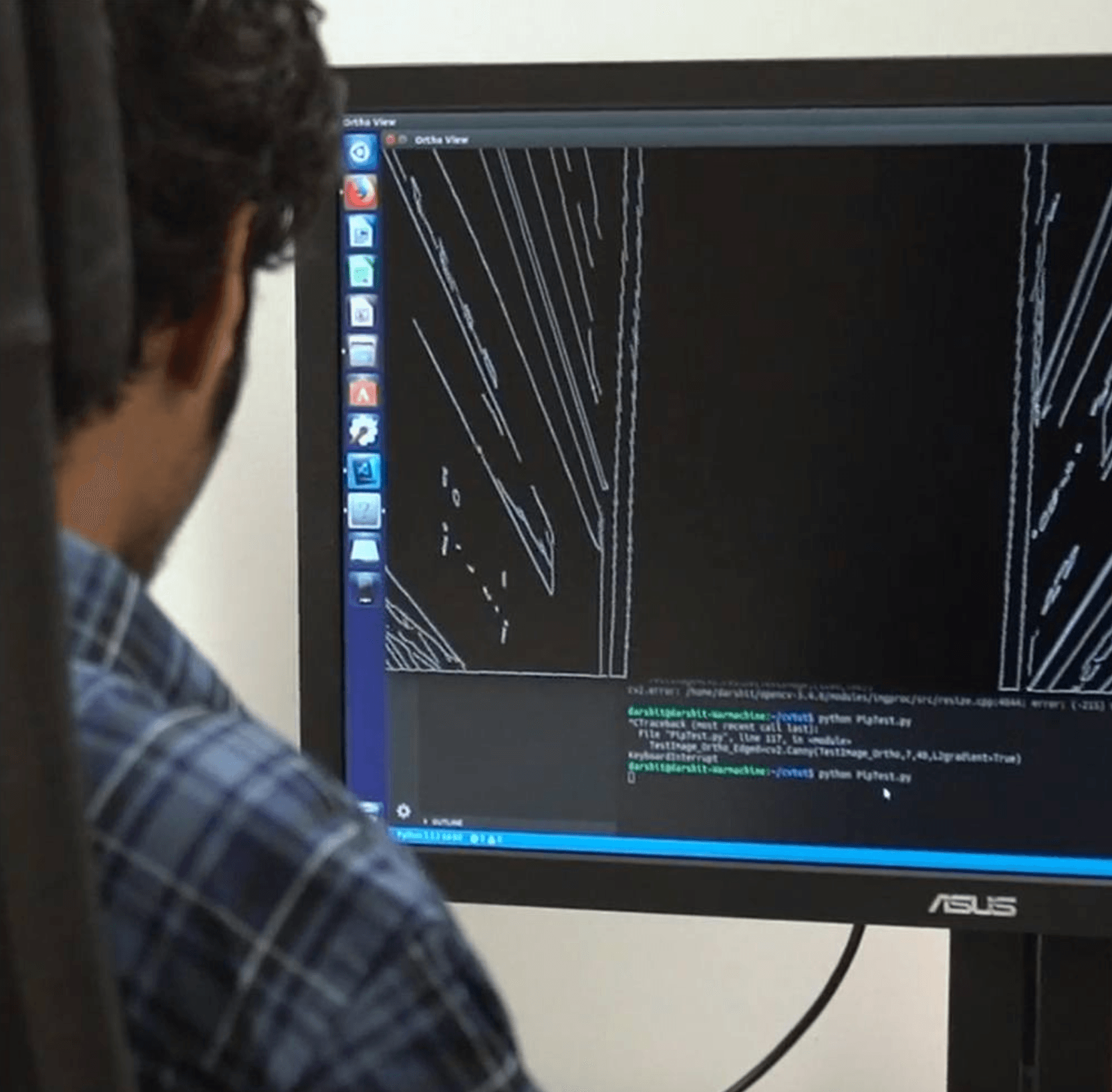
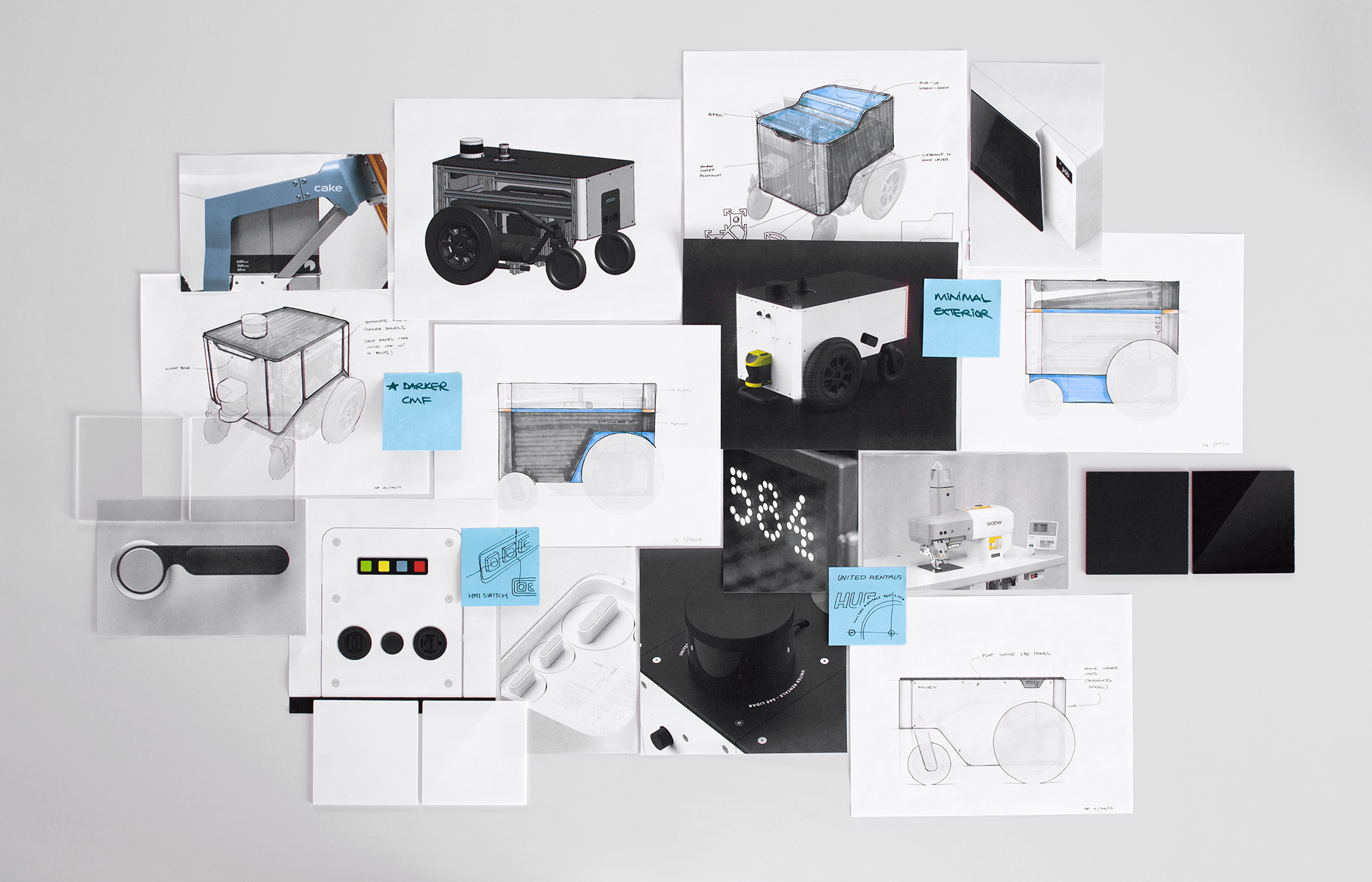
Autonomous systems engineer and published researcher with 10+ years pioneering innovation in robotics, AI, and aerospace. Led greater than $6.5M in R&D initiatives for Fortune 500 companies including Amazon, United Rentals, and Plus.ai. Co-authored academic publication on Advanced Air Mobility with Kansas State University researchers. Specialized in taking autonomous systems from concept to commercial deployment.
Featured Projects
PROJECT APOLLO: Autonomous Compact Track Loader
Client: United Rentals | Role: Autonomy Development Manager | Duration: 18 months
Overview: Led the development of a fully autonomous construction equipment system, transforming a standard Bobcat compact track loader into a Level 4 autonomous machine capable of operating in dynamic construction environments without human intervention.
Technical Architecture:
Perception Stack: Multi-sensor fusion combining 3D LiDAR (Velodyne VLS-128), stereo cameras, and IMU data
Navigation: SLAM implementation achieving 3cm positioning accuracy in GPS-denied environments
Control Systems: Custom ROS2-based autonomy stack with real-time path planning and obstacle avoidance
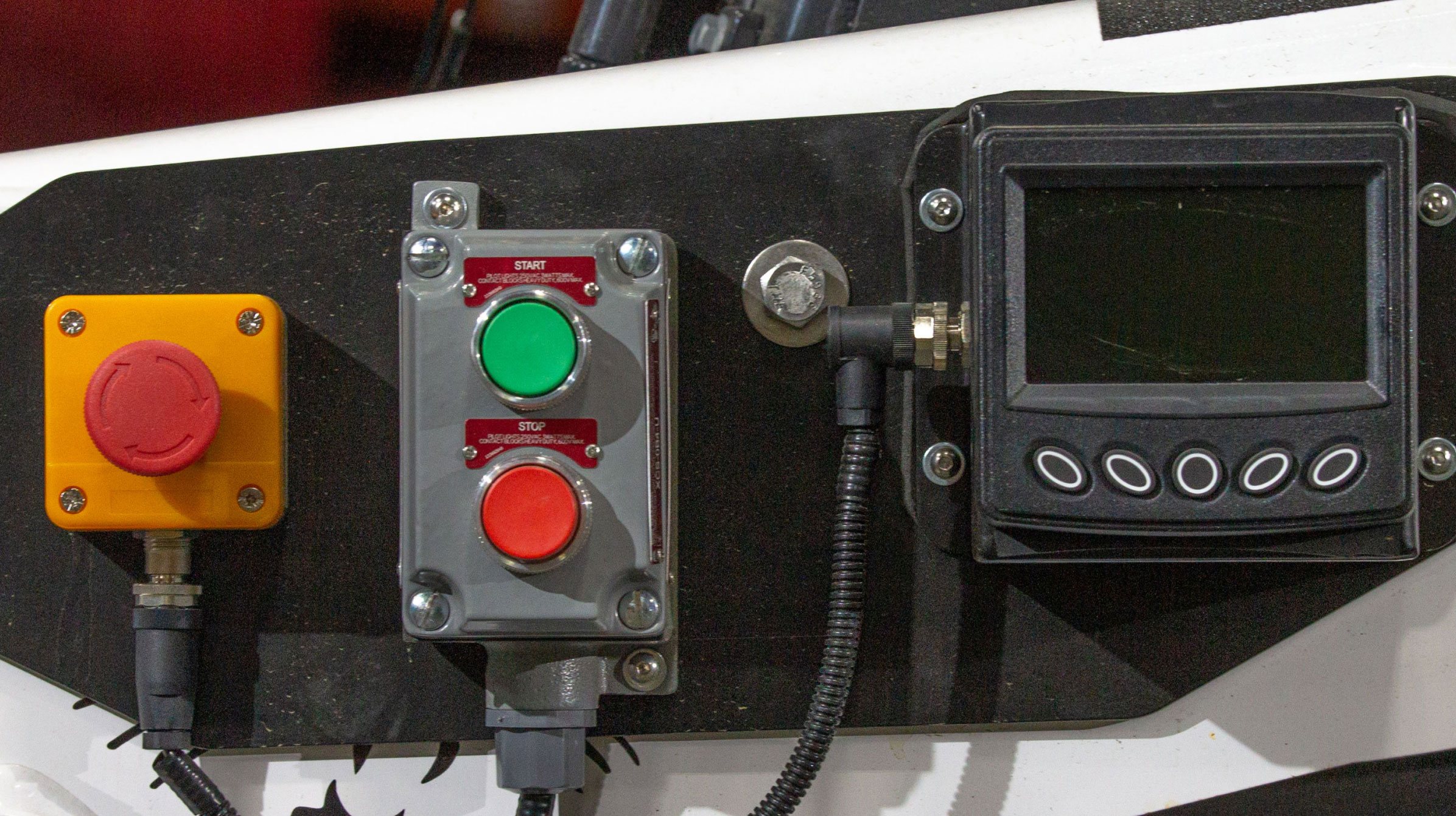
Safety Systems: Redundant emergency stop mechanisms and geofenced operation zones
Key Achievements:
Achieved Level 4 autonomy in structured construction environments
Reduced operational costs by 40% through elimination of operator requirements
Successfully demonstrated 100+ hours of autonomous operation without safety incidents
Patent pending for multi-terrain navigation algorithm
Impact: This project positioned United Rentals as an industry leader in autonomous construction equipment, opening new revenue streams in the $15B construction equipment rental market.
Plus.ai Autonomous Trucking Retrofit Program
Client: Plus.ai | Role: Systems Engineering Lead | Duration: 24 months
Overview: Managed the retrofit installation and integration of PlusDrive autonomous systems on existing Class 8 trucks, enabling Level 4 highway autonomy for long-haul trucking operations.
Technical Contributions:
System Architecture: Designed modular retrofit kit compatible with multiple truck OEMs
Overview: Developed advanced telematics hardware and edge computing solutions for Amazon's last-mile delivery fleet, enabling real-time route optimization and autonomous delivery features.
Technical Implementation:
Hardware Design: Custom PCB with integrated GPS, LTE, CAN bus interface
Edge AI: Deployed TensorFlow Lite models for driver behavior analysis
Cloud Integration: AWS IoT Core for fleet management and analytics
Power Management: Achieved 30-day standby with energy harvesting
Deliverables:
Prototyped and tested 500 units across 3 distribution centers
Reduced delivery times by 23% through ML-based route optimization
Improved driver safety scores by 35% through real-time coaching
Scaled to production deployment of 10,000+ units
Autonomous Mobile Robot Platform Development
Client: Multiple Startups via Fresh Consulting | Role: Robotics Systems Architect | Duration: Ongoing
Overview: Led the design and development of modular AMR platforms for warehouse automation, healthcare logistics, and retail applications.
Key Projects:
Warehouse AMR Fleet: Developed swarm coordination algorithms for 20+ robot fleet, implemented dynamic path planning with 99.9% collision avoidance, achieved 24/7 operation with automated charging stations
Healthcare Delivery Robot: Designed HIPAA-compliant autonomous delivery system, integrated with hospital elevator and door systems, reduced medication delivery time by 60%
Retail Inventory Robot: Computer vision system for real-time inventory tracking, 98% accuracy in product identification, ROI achieved in 8 months through labor cost reduction
Research & Publications
"Navigating the Future: Advancements in Autonomous Systems for Advanced Air Mobility"
Publisher: Kansas State University | Role: Co-Author | Published: May 2024
Authors: Michael J. Pritchard, PhD; Travis Bowman; Chad Bailey; Troy Harding; Saeed Khan, PhD; and Kurt Barnhart, PhD, Balaji Balasubramaniam
Research Contributions:
Conducted NLP analysis on 848 AAM industry job descriptions to identify skill gaps
Developed 8 distinct "Skills Personas" for AAM workforce development
Analyzed autonomous navigation and control systems for urban air mobility
Contributed sections on energy efficiency and power management for eVTOL aircraft
Key Findings:
55% of AAM jobs require software engineering and ML expertise
Identified critical need for interdisciplinary skills in autonomous systems
Proposed framework for industry-university collaboration in AAM sector
Impact: This white paper is being used by Kansas State University to shape curriculum development and by industry partners for workforce planning in the emerging AAM sector.
Technical Innovations
Patent Pending: Multi-Terrain SLAM Fusion Algorithm (Filed: 2023, Status: Under Review) - Novel approach to simultaneous localization and mapping achieving 3cm accuracy without GPS for off-road autonomous vehicles, construction equipment, and agricultural robotics
Open Source Contributions:
ROS2 Autonomous Navigation Stack (500+ GitHub stars, used by 20+ universities)
ML-Based Predictive Maintenance Library (Reduces equipment downtime by 40%, adopted by 3 Fortune 500 companies)
Managed greater than $6.5M R&D portfolio across multiple projects
Led distributed teams of 12-20 engineers across 3 time zones
Achieved 95% on-time delivery rate
Maintained <5% budget variance across all projects
Methodology & Process:
Agile/Scrum implementation for hardware/software co-development
ISO 9001 quality management system design
Design for Manufacturing (DFM) optimization
Technical documentation and knowledge management
Future Vision
Current Focus Areas:
Reinforcement Learning: Developing RL algorithms for adaptive autonomous behavior
Edge AI: Optimizing neural networks for embedded deployment
Swarm Robotics: Multi-agent coordination for large-scale automation
Digital Twins: Real-time simulation for predictive maintenance
Industry Contributions:
Open-source software development
Academic research collaboration
Industry standards development
Workforce development initiatives
References & Testimonials
"Travis's work on the Apollo project transformed our vision of autonomous construction equipment into reality. His ability to bridge the gap between cutting-edge research and practical implementation is unmatched." — Engineering Director, United Rentals
"The telematics solutions Travis developed have become the backbone of our last-mile delivery optimization. His innovation directly contributed to our operational efficiency gains." — Senior Manager, Amazon Logistics
"Travis brings a unique combination of deep technical expertise and strategic thinking. His contributions to our autonomous trucking program were instrumental in achieving our commercial deployment goals." — CTO, Plus.ai
PROJECT APOLLO: Detailed Technical Implementation
As the Autonomy Development Manager, I was deeply involved in the development and R&D aspects of the entire project end-to-end.
Project Overview
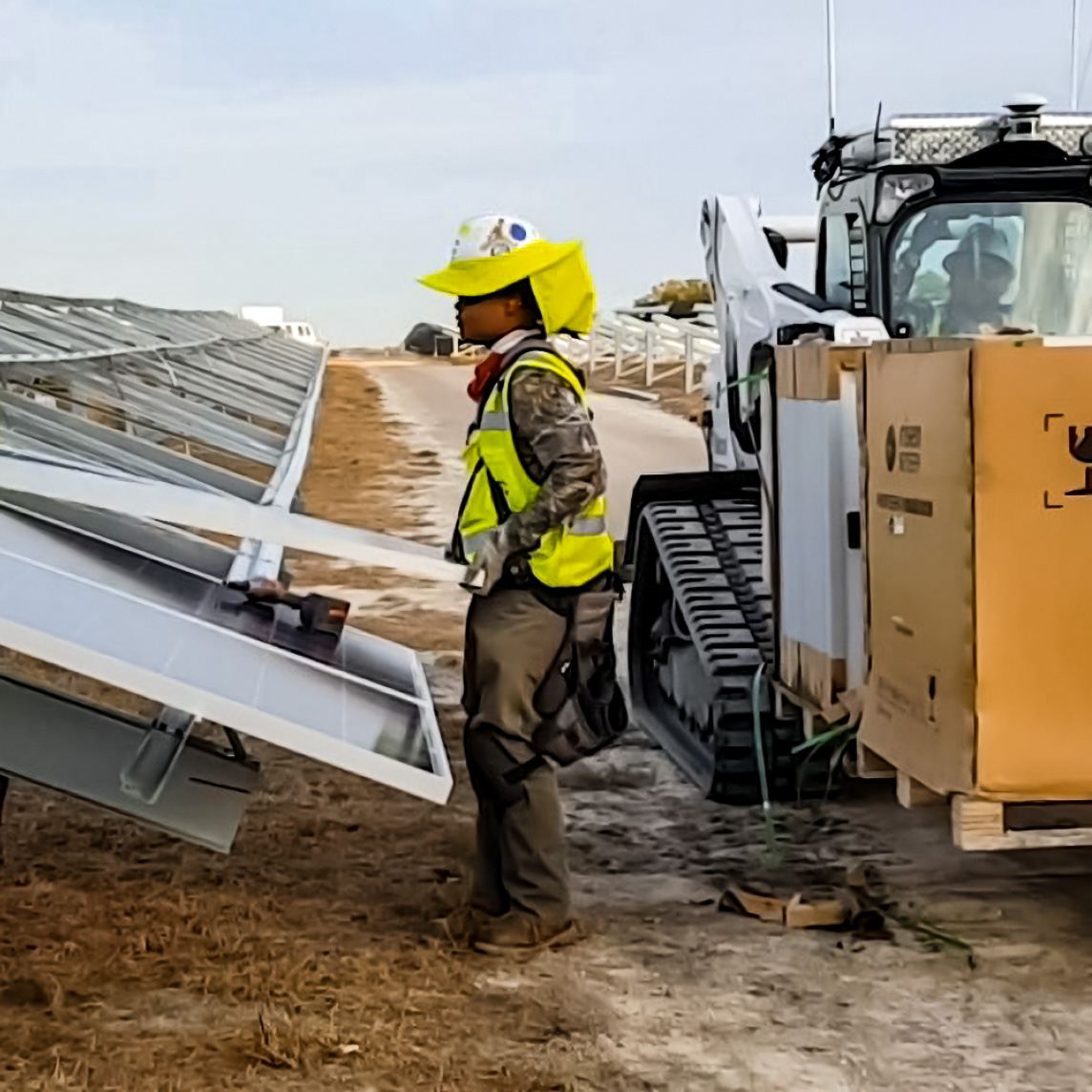
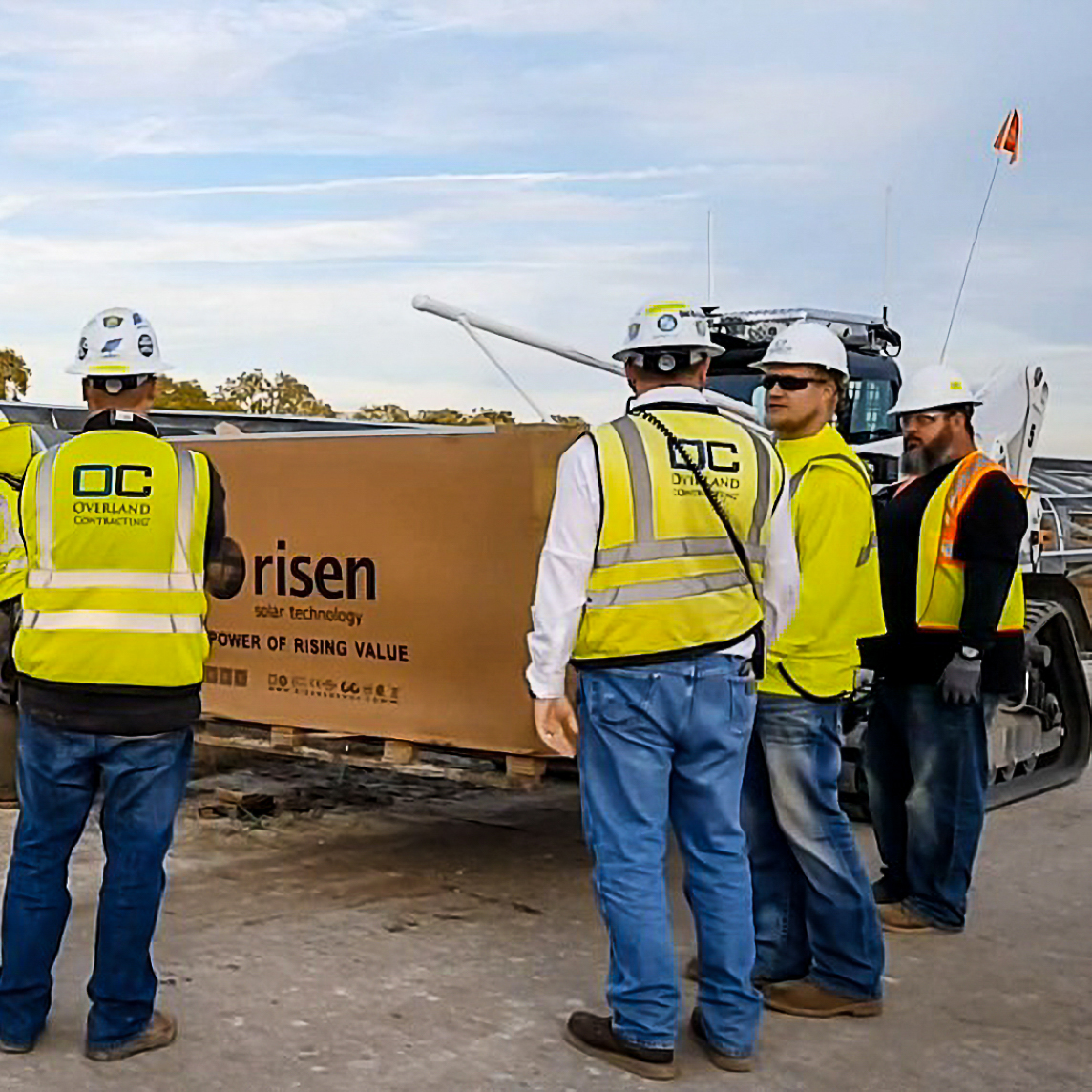
We designed an automated solar panel installation workflow for safe, efficient human-machine collaboration.
Demo Video
The Challenge
Our client approached us to expand on a previous engagement: autonomous forklift technology. Our task was to take the same technology and apply it to a Compact Track Loader vehicle. Their goal was to improve process efficiency on construction sites and improve the overall safety of each crew-member in the field. The challenge involved safely operating a 6-ton vehicle while driving down narrow alleys between expensive solar panels and field crew workers, which required a much more complex strategy than a simple retrofit.
Our Solution
Fresh was the full-service engineering and integration partner. Our teams were responsible for the requirements development, safety analysis, design of the autonomous hardware, firmware, and control software, and developing the fleet management and orchestration software. We also designed the outdoor communications network for robot connectivity to transmit telemetry data for vehicle monitoring, allowing the autonomous vehicles to talk to the mission software via the network, thus enabling the vehicles to deliver panels reliably and autonomously.
The partnership grew into a multi-year engagement to create an optimized program for delivering heavy parts and material with pinpoint accuracy to create seamless construction site operations.
Services & Capabilities
Autonomous Mobile Robots
Electrical Engineering
Robotic Software Development
Firmware Engineering
LabVIEW Services
Mechanical Engineering
RF Engineering
Robotics Engineering
Core Technologies
AWS
SOLIDWORKS
Project Details
The team built a flexible software platform and control system that can be customized to integrate with different types, makes, and models of construction equipment. The solutions can effectively transform most off-the-shelf construction equipment into intelligent, self-driving vehicles.
10+ Sensor Technologies
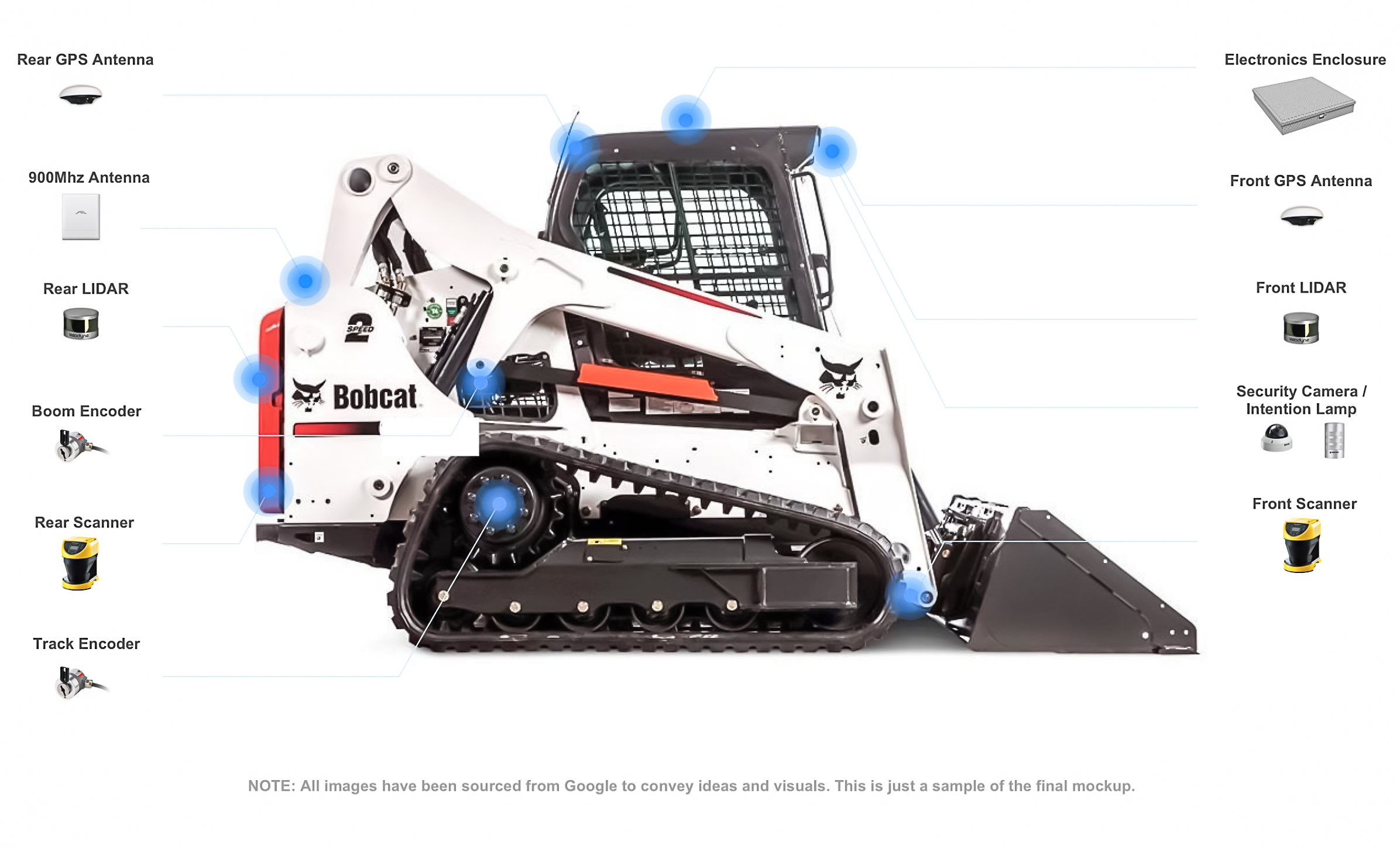
Rear GPS Antenna: Accurate global positioning of the vehicle for autonomous navigation
900Mhz Antenna: Remote communication with the local server, enabled via RF engineering
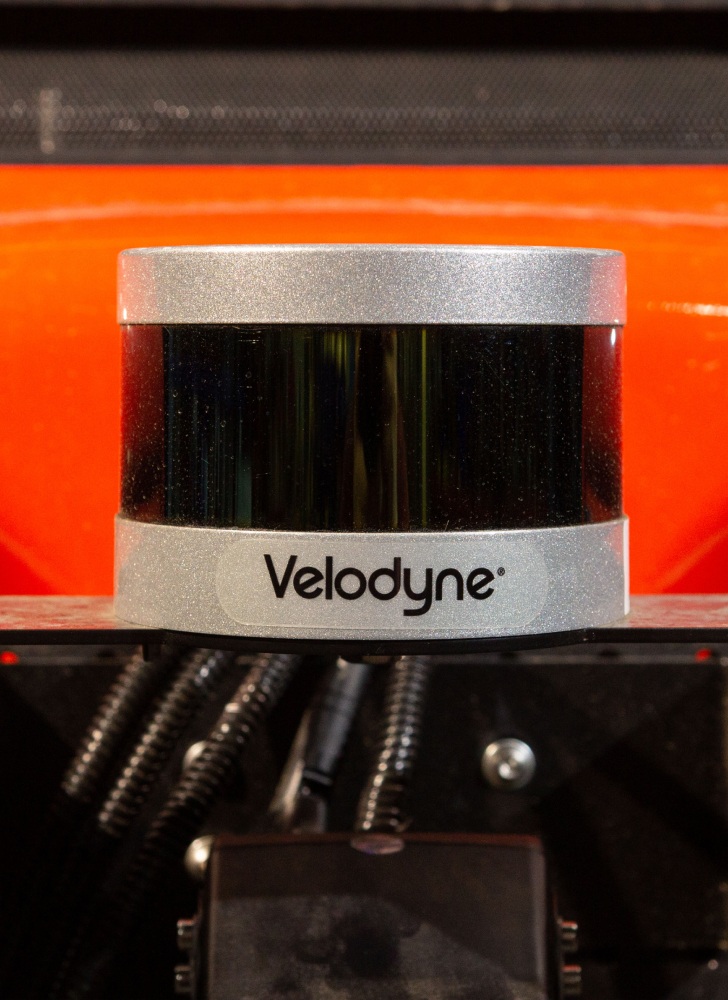
Rear LiDAR: Object detection around the vehicle for navigation purposes
Boom Encoder: Accurate position detection of the lift arm
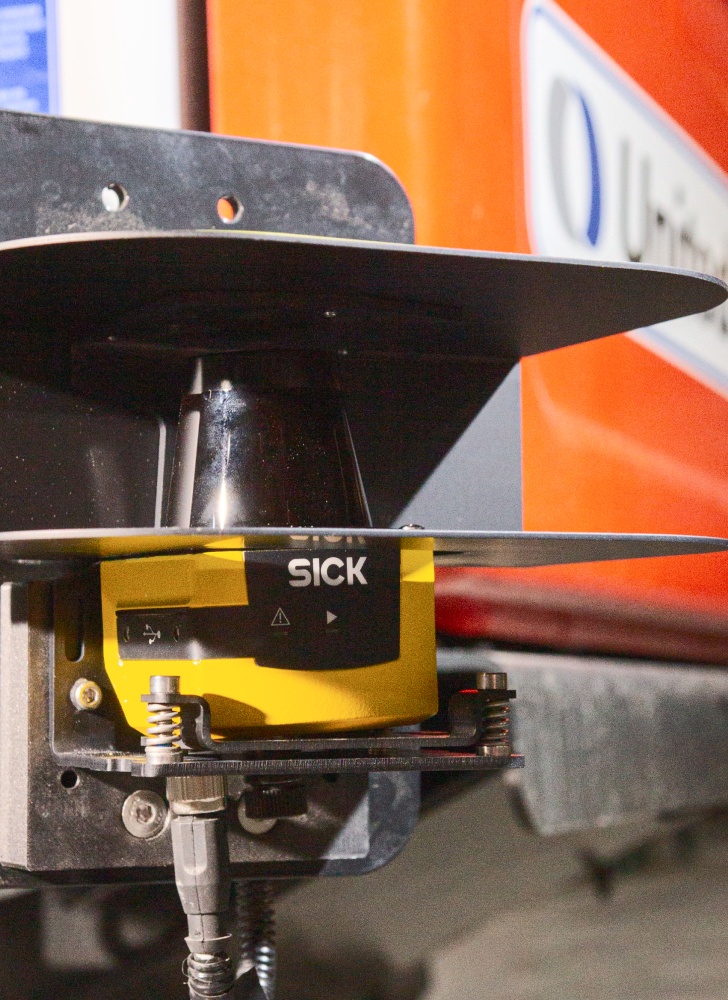
Rear Scanner: Obstacle detection intended for safety in and around the vehicle
Track Encoder: Track detection for accurate navigation
Electronics Enclosure: Command and control components for various sensors
Front GPS Antenna: Accurate global positioning of the vehicle for autonomous navigation
Front LiDAR: Object detection around the vehicle for navigation purposes
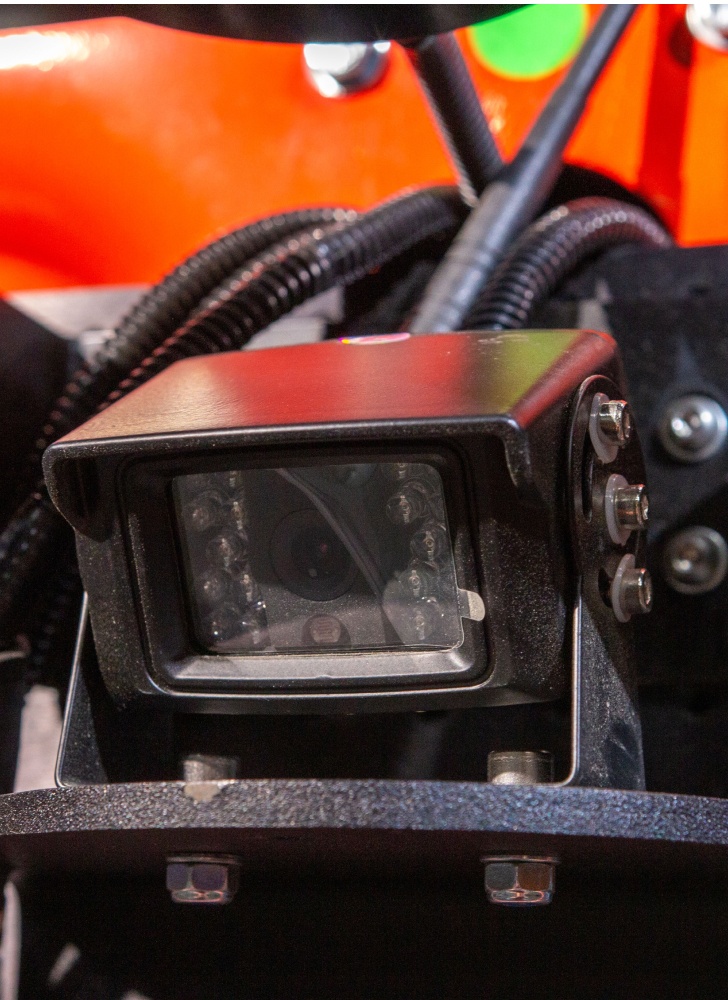
Security Camera & Intention Lamp: Security camera to capture and monitor remote events; intention lamp used to indicate vehicle status
Front Scanner: Obstacle detection intended for safety in and around the vehicle
National Instruments Integration
Compact track loaders were retrofitted with a sensor package to detect obstacles. The vehicles were integrated with National Instruments equipment and software using control logic, allowing the vehicles to drive autonomously. The vehicles were designed to follow a route plotted by a Fresh-developed tablet-based path-planning application to deliver parts and equipment from a staging area to installation crews throughout a solar site.
This automation and precision resulted in immediate productivity gains in installation time, allowed for less wear and tear on the installer, prevented equipment damage during the vehicle's operation, and freed up the operator for other tasks because one less worker was needed to drive the vehicle.
Sensor Images
Leveraging RF Engineering Expertise for Reliable Outdoor Communication
Our RF engineering expertise enhanced the autonomous compact track loader's operational efficiency and connectivity. Fresh's engineers designed a robust outdoor communication network facilitating seamless data exchange between the autonomous vehicle and mission control systems. Transmitted telemetry data communicated to mission control software where the vehicle is, in addition to relaying task status and error reports. GPS data on the vehicle was critical for navigation.
To guarantee optimal performance, we conducted an extensive worksite survey. Utilizing a 900 MHz capable spectrum analyzer, we analyzed RF topography of the site, identifying potential dead zones to ensure comprehensive coverage for the autonomous vehicle. End-to-end testing allowed us to ensure the reliability of our terrestrial communication system, overcoming challenges posed by distance and natural obstacles, such as dense forests.
Delivering Solutions with Velocity
From idea to implementation, the autonomous vehicle for moving solar panels was delivered in less than six months. Once the prototype was proven to work, the team continued refining and iterating the system and now have dozens of autonomous vehicles doing work on solar farms.
Key Results
78 Fully autonomous CTLs manufactured, supporting scale and demand.
2870 Solar panels installed in seven days.
2.5cm Met safety target of 2.5 cm of accuracy for safe collaboration.
We set out to create a scalable autonomous testing solution that gathers information and provides insights about future modifications and retesting.
The Challenge
We needed to tackle the challenge of decreasing downtime for testing larger vehicles, easily fine-tuning sensors, and creating a more efficient engineering development process overall. The solution lay in a robot designed specifically to gather actionable data, optimizing development when building larger autonomous vehicles.
Our Solution
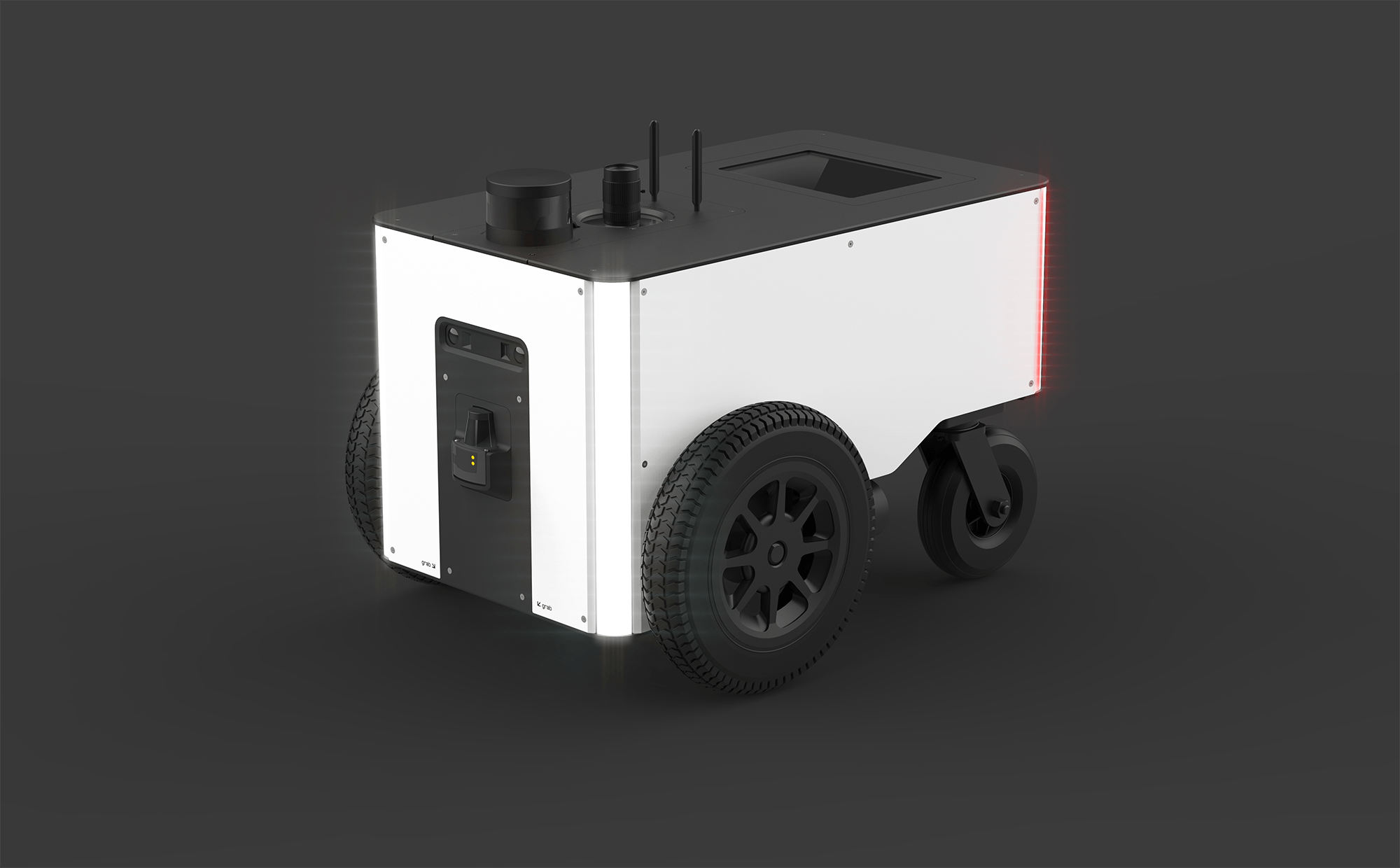
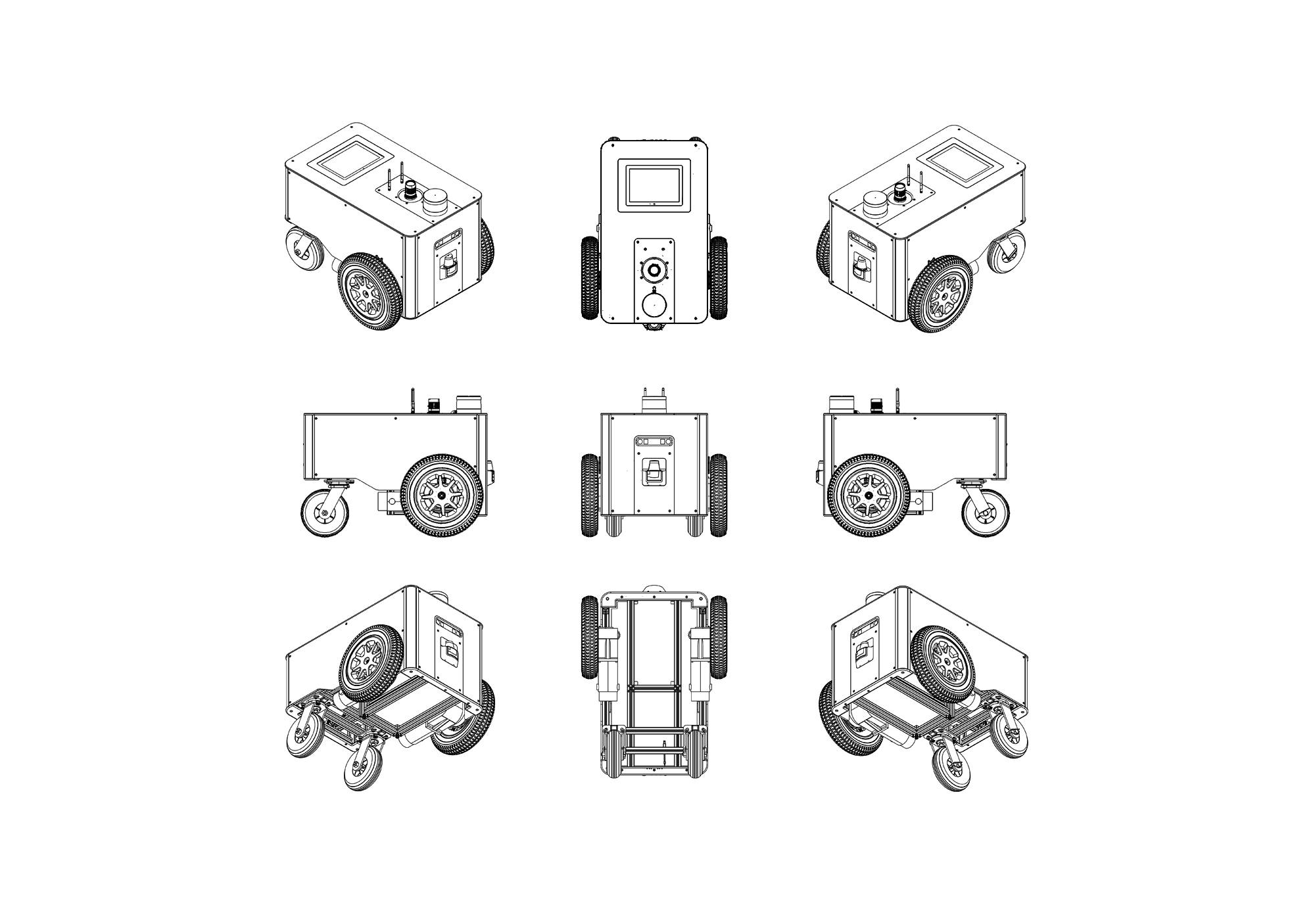
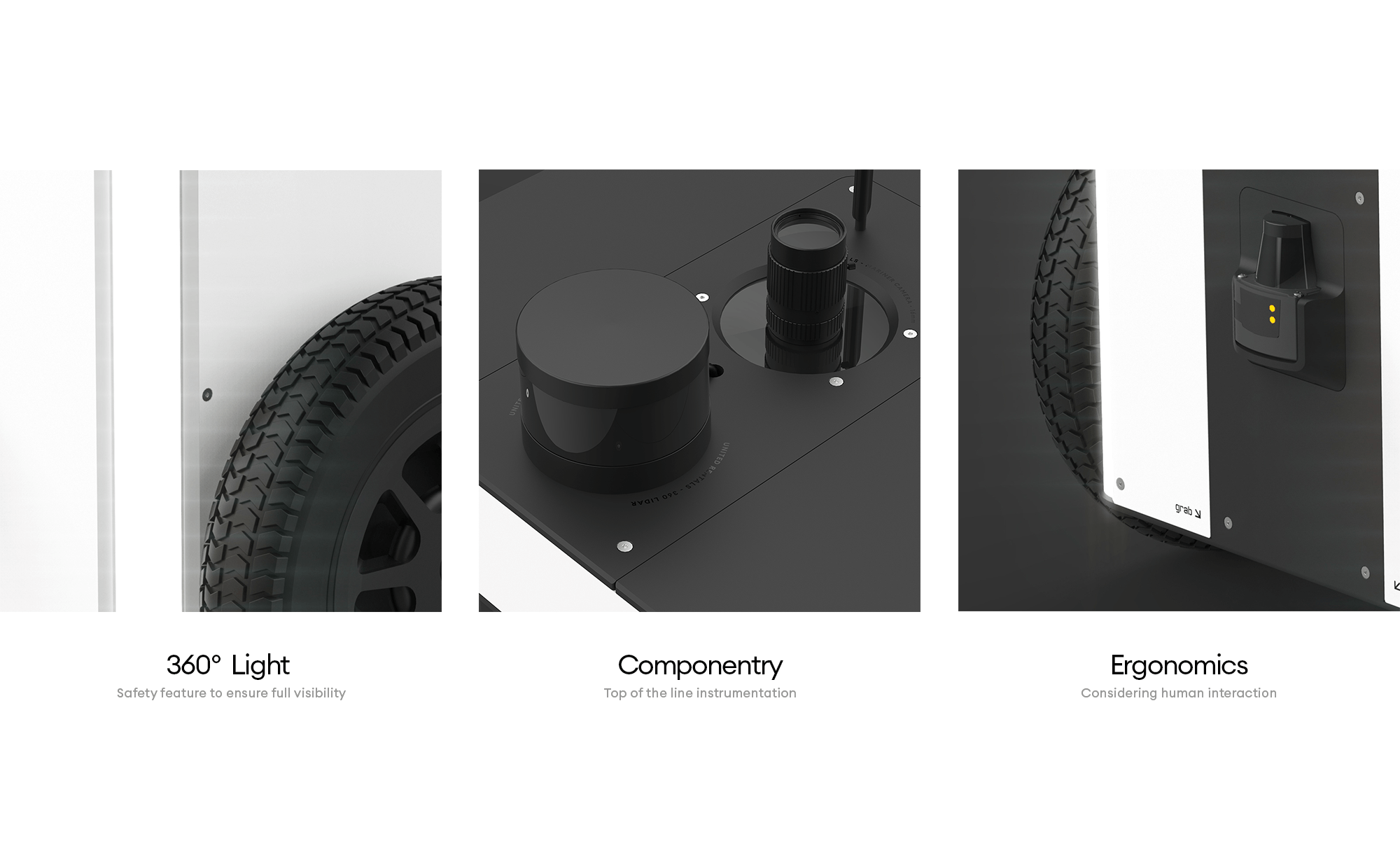
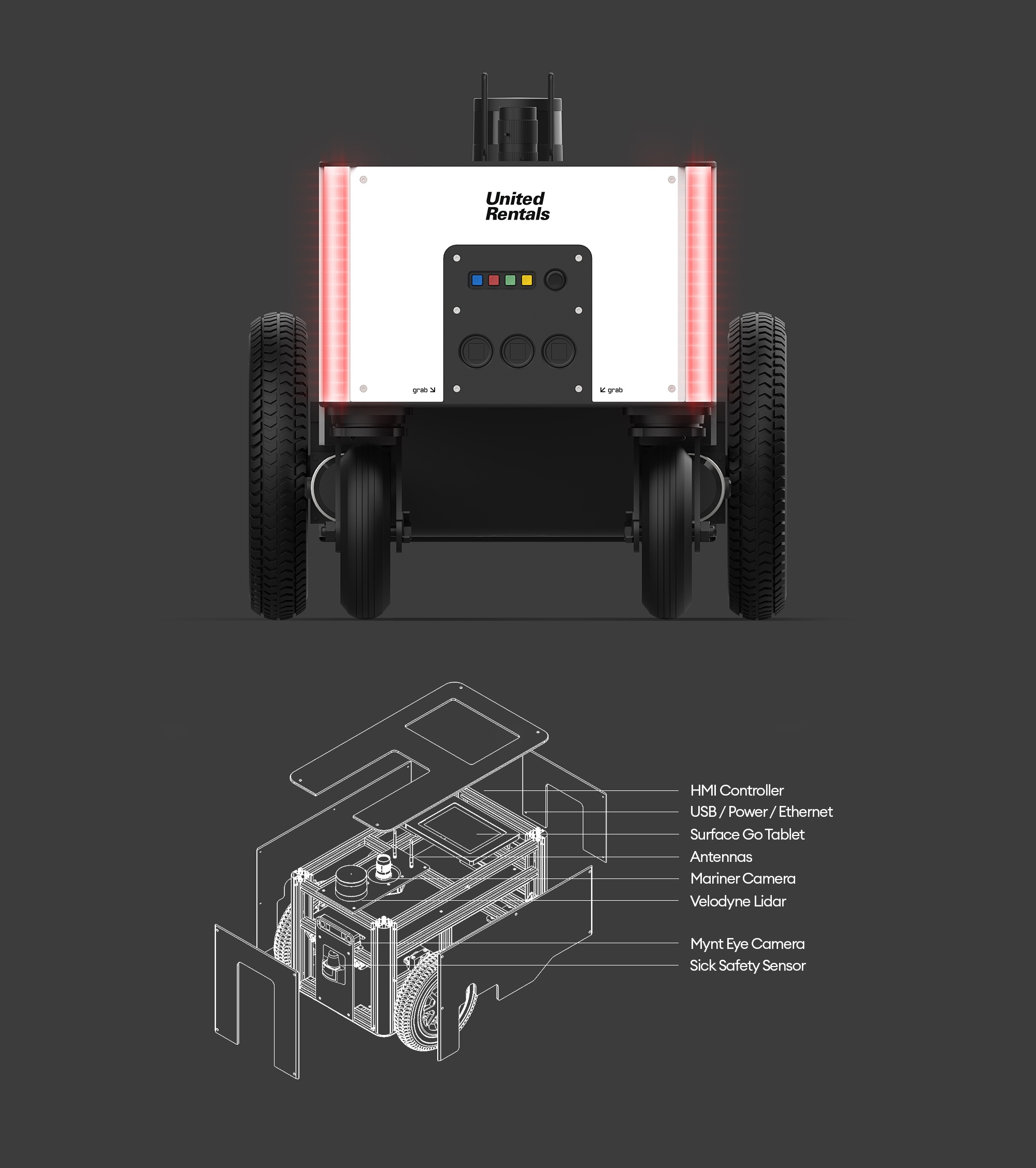
Autonomous vehicles start small before progressing to larger, more sophisticated solutions. We strategized about how to create a manageable robot that serves as a mobile testing platform. We fit the solution with various sensors that provide information for modification, allowing our team to identify opportunities for resting and additional fine-tuning before advancing to future stages of development.
Services & Capabilities
Autonomous Mobile Robots
Firmware Engineering
Industrial Design
Research & Development
Product Development
Robotics Engineering
Core Technologies
Python
SOLIDWORKS
Project Details
Planning for Autonomous Mobility
Autonomous vehicles can increase work productivity by utilizing technology to optimize speed, efficiency, and safety. Removing operator error and adding numerous safety sensors results in fewer accidents and is more capable of accident avoidance. The robot allowed us to understand how similarly operated vehicles would behave in the field.
Testing for Real-World Scenarios
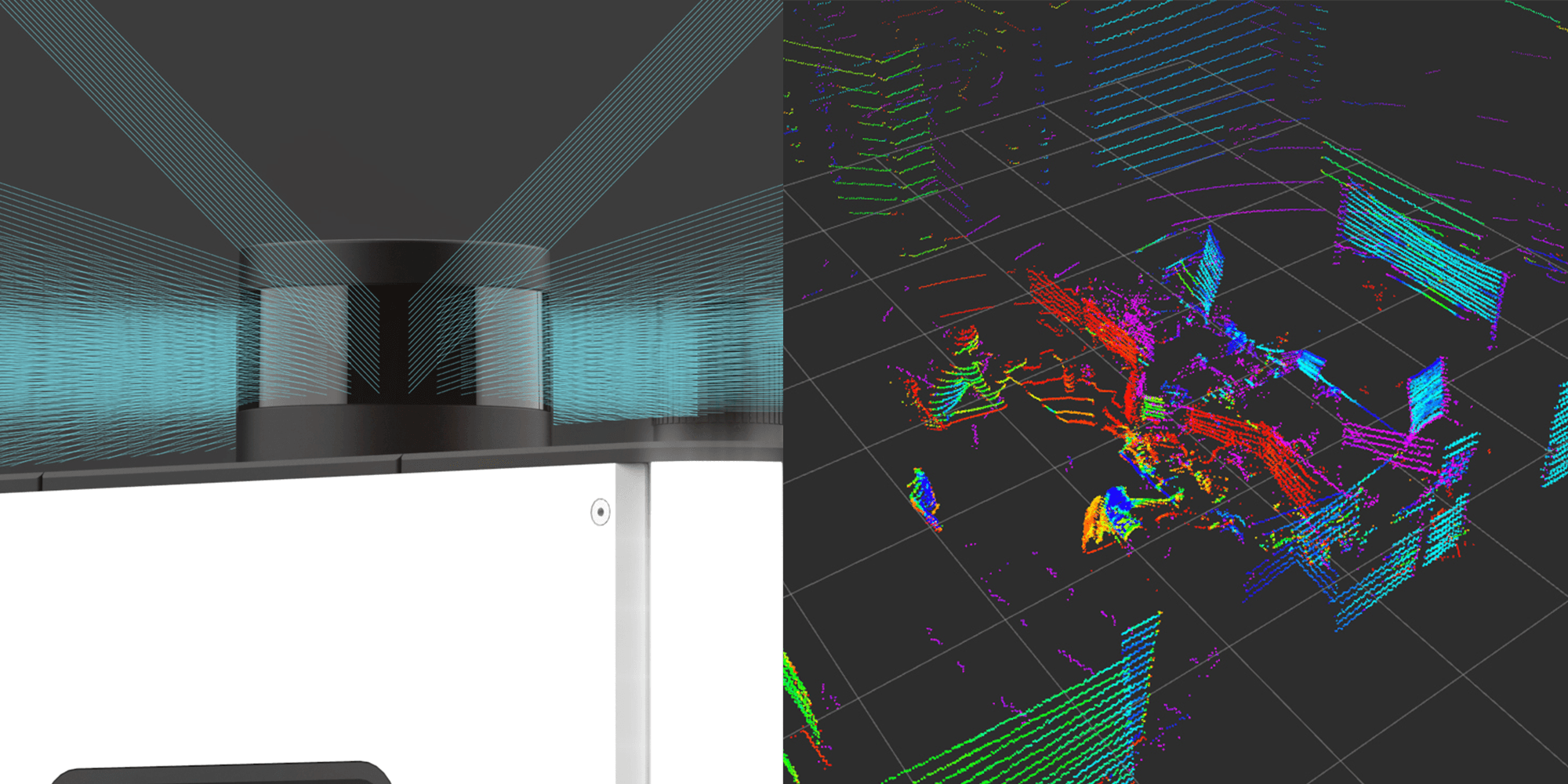
Creating a smaller robotics platform allows for less downtime and testing on larger vehicles in simulated and real-world environments. Our robots gather various information such as Lidar and visual data to make sense of the world around them, allowing us to improve technology in the field.
Project Video
Project video available upon request. Demonstrates autonomous testing capabilities in real-world scenarios.
Benefits
Decreased downtime for testing larger vehicles
Efficient sensor fine-tuning
Scalable autonomous testing platform
Actionable data for modifications and retesting
Business Development & Strategic Partnerships
As a leader in autonomous systems, I have driven business development initiatives that expanded market reach and fostered strategic partnerships. My approach combines technical expertise with business acumen to identify opportunities, negotiate partnerships, and drive revenue growth.
Key Achievements
Secured partnerships with Fortune 500 companies, leading to $6.5M+ in R&D funding
Developed go-to-market strategies for autonomous construction equipment, positioning United Rentals as an industry leader
Expanded client base through targeted outreach and relationship building in logistics and manufacturing sectors
Led cross-functional teams to deliver innovative solutions that addressed market gaps and customer needs
Strategic Statements
"Innovation in autonomous systems requires not just technical excellence, but strategic vision to bring solutions to market and create lasting impact."
"Building partnerships is key to scaling autonomous technologies – combining complementary strengths accelerates deployment and adoption."
"Business development in robotics involves understanding market dynamics, regulatory landscapes, and customer pain points to deliver value-driven solutions."
Fresh Consulting Services: Autonomous Mobile Robots
Autonomous mobile systems come in all shapes and sizes, from wheeled to walking robots, drones, and even large industrial vehicles. The robotics team at Fresh has worked with them all. Whether you are building something custom, looking to modify something for autonomous activities, or need an engineering audit of your existing system, our team can help.
Core Competencies for Autonomous Mobile Robotics
Attachment and implement design and integration
Business dashboards and mission control manager
Cloud services architecture, design and development
Communication reliability optimization
Connectivity, communications, and network design
Custom PCBA development
Data integration and processing
Defining system use-cases, requirements, and other environmental demands
Discovery and understanding of business objectives
End to end market, competitor, and product analysis
Entity OTA update management
Entity tele-op control
Firmware development
Fleet health management
Fleet mission status
Full autonomous development, control and optimization
Gateway optimization
Operational cost management
Operations dashboard
Mapping, localization, and navigation
Middleware integration
Mission waypoint generation, management and status
Payload design
Point to point navigation
Resource, capacity and actuals management
Requirements definition
Safety and security
Scaling, servicing, and supporting
Sensor fusion
Sensor integration
Simulation based development and integration
System Architecture and UX design
Task definition, management and status
Telemetry and informatics capture
Telemetry management
Tele-op control
Testing and documentation
User story and scenario definition
Vehicle fleet inventory management
Partner, Innovate, and Deliver
From remote surveillance and inspection robots to small and large-scale material handling systems, Fresh has the experience, tools, and processes to help you achieve your goals. We orchestrate fleets, choose hardware and software, leverage artificial intelligence for robotics, conduct end-to-end testing and system validation, implement computer vision, and much more.
We provide you with a vetted, end-to-end engineering process that addresses every detail of robotic systems integration. Whether you’re just getting started defining system use-cases and requirements or looking for consultation about how to scale your system and integrate your data, we plug in where you need it.
Proven Autonomous Vehicle Development Process
Explore our approach to building autonomous vehicles. We provide support with a flexible approach, creating new vehicles from the ground up or improving existing ones and testing for optimization.
Contact Me
Interested in collaborating or learning more about my work? Reach out via email or LinkedIn!